
Inside the Capital Case of Carlos Cuesta-Rodriguez: How Oklahoma Appeals and Prison Protocol Collide

 Death Row
Legal transcripts and strict maximum-security protocols define the long-term appellate trajectory of Carlos Cuesta-Rodriguez.
The capital murder case of Carlos Cuesta-Rodriguez stands as a textbook example of how severe violent crime, prolonged post-conviction litigation, and maximum-security correctional controls converge in the American legal system. Sentenced to death in Oklahoma County for the fatal 2003 shooting of his domestic partner, Kathalina Cleveland, his trajectory through state and federal appellate courts reflects the relentless procedural hurdles death-row inmates face when challenging trial representation and mitigation evidence.
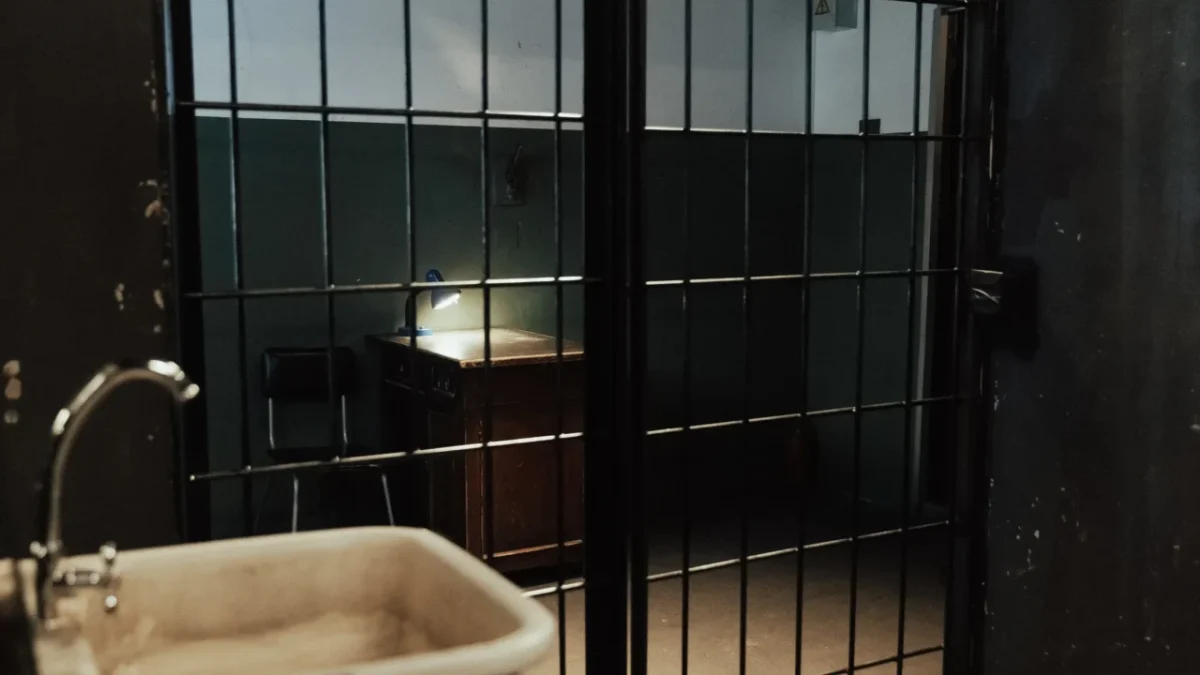
Having spent years under the strict custodial management of the Oklahoma Department of Corrections (ODOC), Cuesta-Rodriguez occupies a tier of the penal system where every movement is regimented by institutional security protocols. In maximum-security capital housing, custody supervisors manage inmates under conditions that prioritize perimeter integrity and officer safety above all else, leaving the legal battles to unfold entirely on paper.
Behind the razor wire, cases like that of Carlos Cuesta-Rodriguez do not move quickly. The journey from a first-degree murder verdict to final execution clemency hearings or post-conviction relief involves decades of exhaustion under the Antiterrorism and Effective Death Penalty Act (AEDPA), testing the endurance of victims’ surviving families and the prison administrators tasked with long-term housing.
The 2003 Homicide and the Oklahoma County Trial
The criminal prosecution against Carlos Cuesta-Rodriguez originated from a lethal confrontation in late May 2003 inside an Oklahoma City residence. Responding officers from the Oklahoma City Police Department encountered a domestic dispute that had escalated into deliberate lethal force, resulting in Kathalina Cleveland sustaining a fatal gunshot wound to the head.
At trial, state prosecutors presented physical evidence, ballistic findings, and witness testimony showing that the shooting occurred amid an ongoing history of domestic conflict and financial arguments. Prosecutors argued that the act carried the explicit malice aforethought required for a capital murder indictment under Oklahoma penal statutes.
The defense attempted to counter the state’s narrative by focusing on the absence of cold, calculated premeditation, pointing to the chaotic emotional state and substance influence present during the altercation. The jury rejected the defense’s lesser-offense arguments, convicting Carlos Cuesta-Rodriguez of first-degree murder and moving the proceedings directly into the high-stakes penalty phase.
In capital litigation, the penalty phase is not merely an extension of the guilt stage; it is a complete institutional accounting of an offender’s past, mental capacity, and future dangerousness.
The Prolonged Appellate Fight Over Trial Mitigation
Following the jury’s decision to recommend capital punishment, the case entered the rigorous machinery of Oklahoma post-conviction review. In capital appeals, defense attorneys repeatedly scrutinize the trial record for constitutional violations, with claims frequently centering on the Sixth Amendment guarantee of effective assistance of counsel.
- Direct Appeal Denial: The Oklahoma Court of Criminal Appeals (OCCA) reviewed the initial conviction and sentencing, upholding both the guilty verdict and the death sentence against challenges regarding juror selection and evidentiary rulings.
- State Post-Conviction Petitions: Subsequent filings focused heavily on trial counsel’s alleged failure to investigate and present comprehensive social history and mental health evaluations during the penalty phase.
- Federal Habeas Corpus Filings: In the U.S. District Court for the Western District of Oklahoma and later the Tenth Circuit Court of Appeals, appellate attorneys sought relief under federal constitutional protections, arguing substantial prejudice.
The Legal Burden of the Strickland Standard
Appellate counsel representing Carlos Cuesta-Rodriguez argued that his original trial attorneys provided deficient representation by failing to uncover and present evidence of organic brain dysfunction, severe historical trauma, and psychiatric impairment to the jury. Under the governing legal standard established in Strickland v. Washington, a defendant must show not only that counsel’s performance fell below professional standards, but also that this deficiency prejudiced the outcome of the sentencing phase.
Reviewing federal courts applied the deferential standards mandated by AEDPA, which severely limit a federal judge’s authority to overturn state court factual findings. The courts determined that while mitigation investigation was subject to dispute, the aggravating factors established by the state—including the brutality of the crime and the offender’s prior violent history—outweighed the hypothetical impact of the unpresented psychiatric evidence.
| Legal & Operational Phase | Documented Case Reality |
|---|---|
| Primary Conviction | First-degree capital murder conviction in Oklahoma County District Court for the fatal shooting of Kathalina Cleveland. |
| Core Appellate Challenge | Claims of ineffective assistance of trial counsel regarding unpresented neuropsychological and trauma mitigation. |
| Federal Review Status | Habeas corpus claims denied under AEDPA deference standards by federal district and circuit courts. |
| Custodial Placement | High-security death row housing managed under strict Oklahoma Department of Corrections administrative protocols. |
Correctional Reality Inside Oklahoma’s Maximum-Security Housing
Away from the courtroom, capital offenders in Oklahoma are managed under stringent custodial conditions, historically centered at facilities such as the Oklahoma State Penitentiary (OSP) in McAlester. Housing inside dedicated capital units involves structural separation designed to eliminate physical contact between death-row inmates and the broader institutional population.
Inmates remain confined to individual cells for up to twenty-three hours a day, with solitary exercise periods conducted in secure outdoor pens. Every exit from the cell requires strict compliance: mechanical restraints applied through the door trap, two-officer escorts, and thorough strip-searches before returning to housing blocks.
This operational rigidity creates a unique institutional subculture where life is defined by court dockets, legal mail delivery, and quiet routine. Correctional officers working these wings maintain professional distance, monitoring suicide risks, contraband movement, and behavioral declines as inmates exhaust their final legal remedies.
⚖️ For the family of Kathalina Cleveland, the legal trajectory of Carlos Cuesta-Rodriguez represents decades of navigating an appellate system designed to exhaust every constitutional safeguard before a final sentence is carried out.
🚨 The case underscores the immense evidentiary burden capital defense teams carry when attempting to overturn state-level jury verdicts in federal courts under modern statutory restrictions.
📁 Because execution scheduling, clemency board reviews, and administrative housing designations are subject to change, observers must verify ongoing status directly through the Oklahoma Court of Criminal Appeals and the Oklahoma Department of Corrections.
🔒 Follow our coverage for deep-dive investigations into capital jurisprudence, forensic appeals, and the reality of maximum-security corrections across the United States.







