Florida Death Warrant Stands: Inside James Robertson’s Scheduled Execution for 2008 Charlotte Correctional Slaying

 Death Row
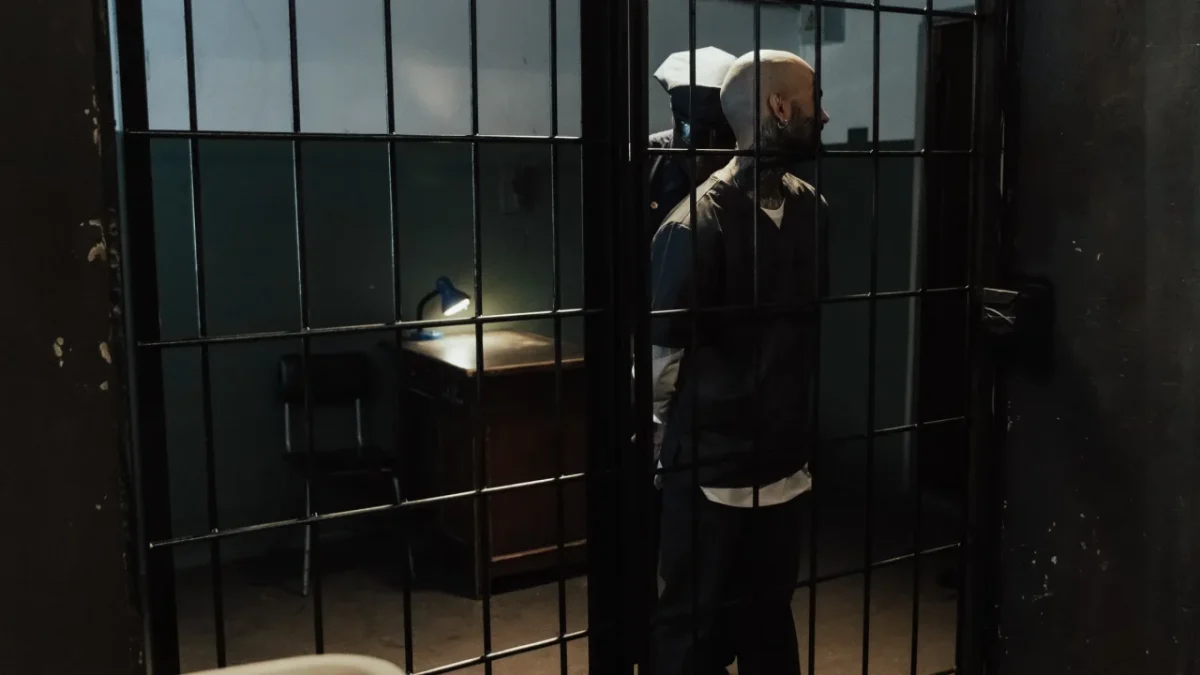
Death watch housing units enforce round-the-clock physical surveillance and stringent security protocols leading up to an execution.
Convicted killer James Robertson remains locked on Florida’s death watch under an active execution warrant, moving directly toward the death chamber after state officials halted another condemned man’s execution set for the same afternoon. At 63 years old, Robertson faces lethal injection at noon on Tuesday for the brutal 2008 slaying of his cellmate, Frank Hart, inside Charlotte Correctional Institution.
Anyone who has walked the tiers of a maximum-security compound knows that inmate-on-inmate violence represents the sharpest edge of correctional danger. Behind solid steel doors, cellmates are locked in tight, claustrophobic proximity for hours at a stretch. When an inmate turns lethal within those concrete perimeters, the state views the act as an assault on institutional order that carries the ultimate statutory penalty.
The Institutional Homicide at Charlotte Correctional
The capital case against James Robertson traces back to 2008, when violence erupted inside the cells of Charlotte Correctional Institution in Punta Gorda, Florida. Robertson turned on Frank Hart, the inmate assigned to share his immediate living quarters, carrying out a fatal assault that ended Hart’s life behind the wire.
Correctional institutions rely on careful classification to separate violent predators from vulnerable individuals, yet volatile conflicts can detonate in seconds. Murders committed inside prison walls present unique evidential dynamics for state prosecutors. The crime scene is already a secure facility, eliminating outside suspects and focusing forensic attention squarely on physical evidence, cell assignments, and internal movement logs.
In maximum security management, cell confinement forces violent proximity, leaving zero margin for error when predatory behavior surfaces behind closed doors.
Following the institutional homicide of Hart, prosecutors pursued capital murder charges rather than settling for additional consecutive life sentences. For incarcerated men already serving extensive prison terms, capital punishment remains the single legal deterrent correctional departments can leverage against fatal attacks on staff and fellow inmates.
The Reality of Florida’s Death Watch
Following his capital conviction and sentence, Robertson was transferred to death row housing, ultimately landing on Florida’s high-restriction death watch tier at Florida State Prison in Starke once the governor executed his death warrant. Death watch strips away standard housing privileges, subjecting the condemned man to continuous physical observation and rigid procedural control.
- Targeted Security Housing: Inmates on death watch remain under 24-hour line-of-sight monitoring by designated correctional officers.
- Restricted Movement Protocols: Every exit from the cell requires full mechanical restraints, high-security escorts, and thorough strip searches.
- Legal Timetable: Robertson’s warrant fixes his execution time at noon on Tuesday, establishing an unyielding timeline absent judicial intervention.
- Execution Secrecy Laws: Under state statutes, the Florida Department of Corrections remains legally exempt from disclosing the identities of lethal injection drug suppliers or execution executioners.
The Split Decision: Executive Action Leaves Robertson Standing Alone
The final days preceding Robertson’s execution date brought sudden procedural drama inside Florida’s executive branch. Governor Ron DeSantis issued a formal order canceling the death warrant for 74-year-old William Lee Thompson, who had faced execution six hours after Robertson on Tuesday evening.
Thompson’s legal team had fought for emergency stays based on advanced dementia, multiple medical crises, and neuropsychological evaluations showing severe cognitive impairment. While Thompson was spared lethal injection following an evaluation by a appointed medical panel, the governor’s office provided no reprieve for Robertson.
The state made no move to disturb Robertson’s warrant, ensuring his execution path remained active. While medical and mental competency claims altered Thompson’s trajectory, Robertson enters his final countdown with no executive intervention slowing the process.
| Operational Parameter | Documented Case Fact |
|---|---|
| Condemned Inmate | James Robertson (Age 63) |
| Victim | Frank Hart (Cellmate) |
| Crime Location | Charlotte Correctional Institution |
| Incident Year | 2008 |
| Current Housing | Death Watch, Starke, Florida |
| Warrant Status | Active for execution at noon Tuesday |
🔒 When violent crime happens behind prison walls, the correctional system enforces absolute accountability to maintain institutional safety.
⚖️ For the family of Frank Hart, the scheduled execution marks the legal resolution of a violent cellmate slaying committed nearly two decades ago.
📁 Unless an appellate court issues a last-second stay, correctional staff at Florida State Prison will proceed with the lethal injection protocol at the scheduled noon hour.
Share this investigation with fellow true-crime followers and join the discussion below.