Pentagon Prepares to Broadcast Nidal Hasan’s Firing Squad Execution

 Death Row
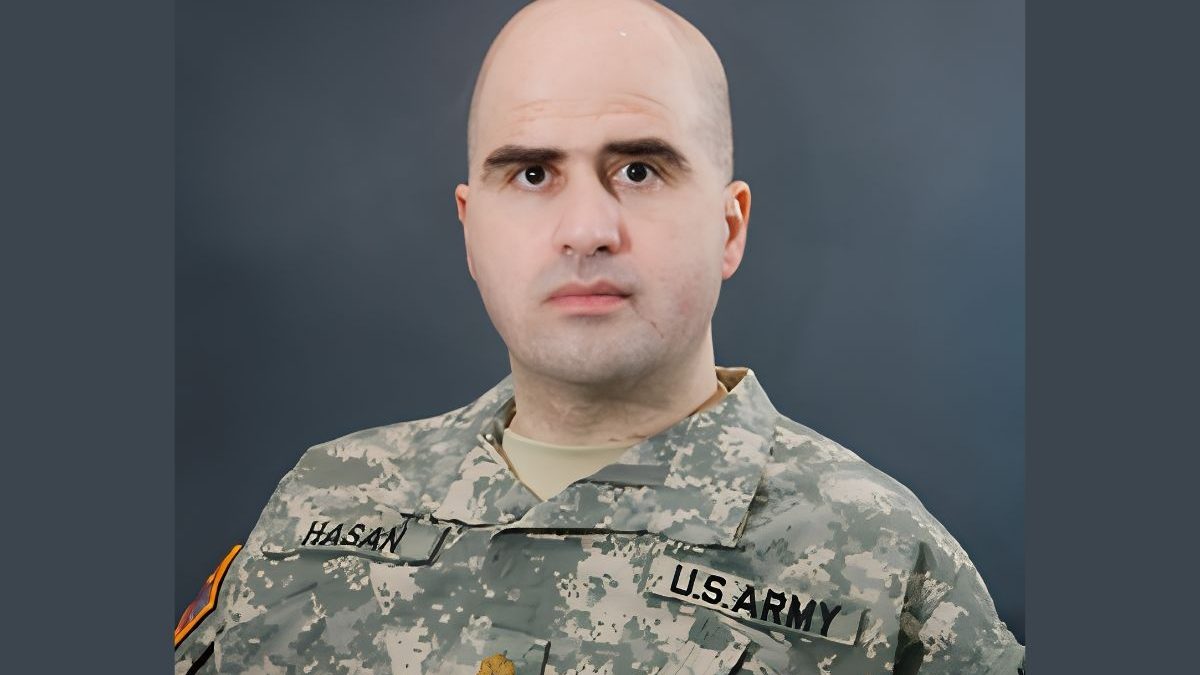
The Department of Defense has confirmed an unprecedented operational directive to carry out the military death sentence of Nidal Hasan by firing squad and livestream the execution to the public. Hasan, the former Army major and psychiatrist convicted of killing 13 people during the 2009 mass shooting at Fort Hood, Texas, is scheduled to face military executioners on December 3 directly on the grounds where the massacre occurred.
For veteran custody officers and criminal justice observers who track high-security death watch tiers, the decision tears up decades of quiet, heavily insulated execution protocol. Capital sentences handed down under the Uniform Code of Military Justice are typically insulated behind concrete perimeters and layers of executive review, far from public view.
Breaking Military Protocol: The Path to Fort Hood
Military regulations have long mandated lethal injection as the sole standard for capital punishment under the armed forces penal framework. Under the original execution roadmap, known as “Operation Resolute Justice,” prison authorities planned to move Hasan from the United States Disciplinary Barracks at Fort Leavenworth, Kansas, to the Federal Correctional Complex at Terre Haute, Indiana.
Terre Haute houses federal death row and has managed every civilian federal execution carried out since 2001. Pentagon officials scrapped that transfer route entirely, ordering the execution to occur on-site at Fort Hood while pivoting to a firing squad comprised of active soldiers.
“We’ll make sure that people are able to watch it. That it’s public. Because people need to understand that there’s serious consequences for these types of things,” Secretary Pete Hegseth stated aboard a Navy vessel.
Pentagon leadership confirmed hours later that the event will be broadcast across a public livestream. If carried out as structured, the broadcast will mark the first public execution in the United States since the 1930s, dismantling standard institutional barriers that restrict media and witness viewing inside lethal chambers.
Precedents and the Lethal Injection Impasse
The military has not executed a service member in over 60 years. The last military execution occurred in 1961, when Pvt. John Bennett was hanged following convictions for the rape and attempted murder of an 11-year-old child.
Executing Nidal Hasan via firing squad sets a historical benchmark that reaches back even further into military archives:
- Eighty-one years since the last military firing squad: The U.S. military last utilized a firing squad in 1945 to execute Pvt. Eddie Slovik for desertion during World War II.
- Exhausted legal challenges: A general court-martial sentenced Hasan to death in 2013, and the U.S. Supreme Court formally denied his petition to review the capital conviction last year.
- Chemical execution volatility: The military’s procedural pivot to a firing squad coincides with severe scrutiny surrounding chemical execution drugs nationwide, highlighted when a condemned prisoner in Tennessee recently survived two doses of lethal pentobarbital.
| Operational Parameter | Documented Protocol Detail |
|---|---|
| Inmate Identity | Former U.S. Army Maj. Nidal Hasan |
| Conviction Record | 13 counts of premeditated murder (Fort Hood, 2009) |
| Original Transfer Plan | Fort Leavenworth, Kansas to FCI Terre Haute, Indiana |
| Designated Execution Site | Fort Hood, Texas |
| Execution Method | Military firing squad (regulatory departure from lethal injection) |
| Witness Visibility | Pentagon-authorized public livestream |
Facing the Shooter: Survivor Witness Protocols
Inside any maximum-security perimeter, the physical presence of victims and survivors during capital movements creates immense operational tension. Survivors of the 2009 mass shooting have already confirmed plans to attend the Fort Hood execution in person.
Among those preparing to enter the viewing area is a soldier who survived being shot seven times during Hasan’s attack and was left for dead on the floor of the military processing center. For institutional staff, managing victim witnesses alongside active broadcast equipment presents unprecedented logistical and chain-of-custody burdens.
Hasan entered the military readiness center in 2009, shouted an Arabic religious phrase, and opened fire on unarmed soldiers preparing for overseas deployment. The impending December date closes a legal and appellate cycle that has spanned seventeen years across military courts, civilian appeals, and presidential desk reviews.
⚖️ When a capital sentence moves out of Leavenworth’s secured compound to an active military post, base security enters territory unseen in modern American history.
🚨 Broadcasting a firing squad execution strips away the clinical detachment that has defined American capital punishment since executions moved behind prison walls a century ago.
🔒 For the survivors who took gunfire and watched colleagues fall, the planned visual confrontation marks the final procedural chapter in a long-delayed court-martial judgment.
What is your take on the Pentagon broadcasting military executions to the public? Share your thoughts in the comments below.