What Really Happens Inside Global Prisons: A Former Corrections Officer on How Foreign Systems Enforce Custody Behind the Wire

 Global Prisons
Perimeter security protocols dictate daily movement and operational stability across high-custody penal facilities worldwide.
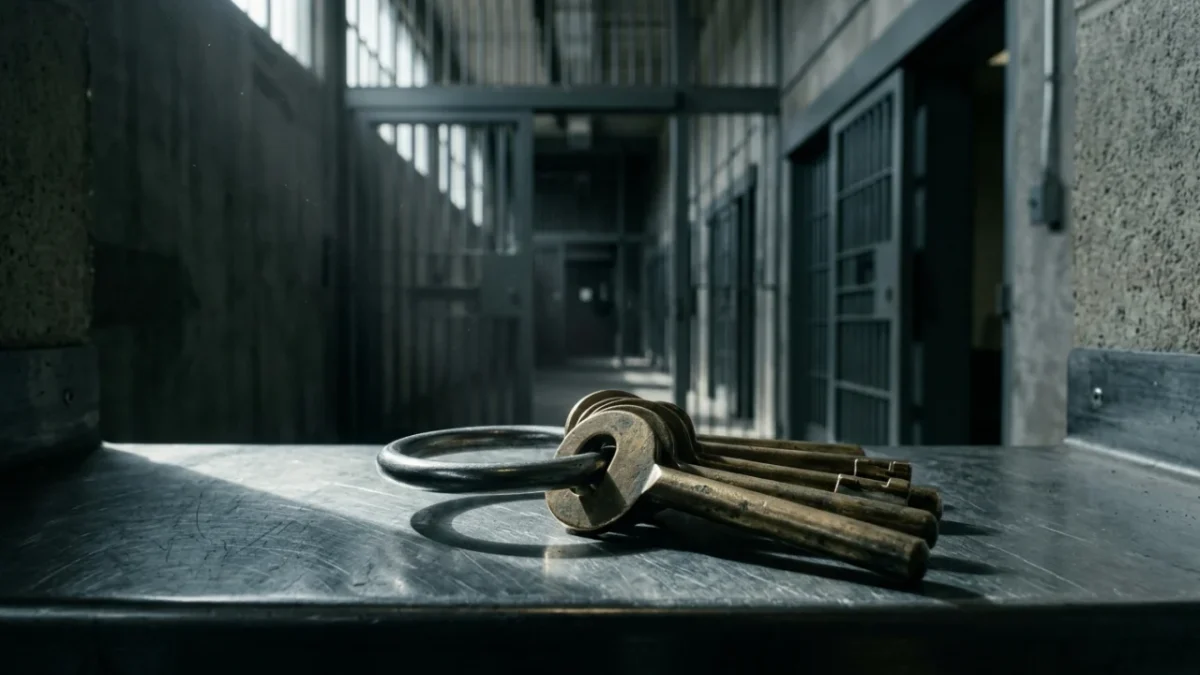
Behind razor wire and heavy steel sally ports, global prisons run on fundamentally divergent doctrines of containment, architectural control, and institutional order. Anyone who has carried a key ring down a maximum-security tier knows that real custody has nothing to do with cinematic riots or dramatic escapes. Order inside any locked perimeter is an engineered equilibrium maintained through strict count procedures, security classifications, and constant tactical monitoring.
Across jurisdictions worldwide, correctional systems approach inmate custody from polar extremes. While American state systems and the Federal Bureau of Prisons rely heavily on structural hardening and perimeter interdiction, foreign penal administrations frequently counter risk through entirely different operational playbooks. Understanding how different societies manage high-risk offenders exposes the stark mechanics of justice long after the sentencing gavel falls.
The Operational Divide: Architectural Control vs. Dynamic Security
Correctional management universally splits into two competing operational philosophies: physical static containment and dynamic relational security. In facilities designed around static security, movement is restricted through automated slider doors, gun galleries, and physical barriers that physically separate staff from the population.
In contrast, systems operating under dynamic security models position unarmed officers directly inside open communal living units. Rather than relying solely on reinforced concrete, staff rely on interpersonal intelligence, recognizing shifts in inmate posture, micro-expressions, and internal hierarchy changes before violence erupts on the range.
In maximum security management, the quietest unit is usually the one under the tightest internal discipline.
When tension spikes inside a housing unit, the physical architecture dictates tactical options. Linear cellblocks with blind corners force officers into reactionary postures, whereas podular direct-supervision layouts give custody staff uninterrupted sightlines across common dayrooms.
Custody Classifications and the Threat Matrix
Every penal agency, regardless of geographic borders, utilizes an intake assessment to profile arriving offenders. Custody classification boards evaluate escape risk, criminal sophistication, institutional predatory behavior, and external gang ties before assigning an inmate to a bunk.
- Maximum and Supermax Custody: Single-cell housing, restricted out-of-cell movement, full-restraint escort procedures, and controlled recreation cages designed to neutralize internal disruption.
- Medium Custody: Double-bunked cells or fortified dormitories with structured group movement for meals, industry assignments, and limited yard privileges.
- Minimum Custody: Open compound dormitories with designated perimeters, minimal physical barriers, and an operational focus on work details and community reintegration.
When an agency misclassifies an inmate, the institutional cost is immediate. Housing predatory offenders alongside vulnerable populations destabilizes housing units, driving extortion rackets and manufacturing illicit black markets for weapons and contraband.
Segregation Protocols: Managing Institutional Volatility
Special Housing Units, known throughout American corrections as the SHU or administrative segregation, represent the most restrictive tier in penal management. These units isolate individuals who present an immediate danger to facility security, staff safety, or other inmates, as well as those requiring protective custody from institutional hits.
Internationally, the legal standards governing solitary confinement vary sharply. While some systems isolate disruptive leaders indefinitely to dismantle gang command structures, international bodies frequently challenge sustained segregation exceeding fifteen consecutive days. Inside the tier, prolonged isolation fundamentally alters inmate behavioral baselines, presenting unique tactical challenges for custody teams conducting routine tier checks and wellness rounds.
| Correctional Model | Primary Operational Protocol |
|---|---|
| Static Security (US/Latin America) | Architectural isolation, hardened physical barriers, armed response perimeters, and rigid count schedules. |
| Dynamic Security (Northern Europe) | Direct staff-inmate contact, continuous behavioral monitoring, open movement, and structured social normalization. |
Operating these distinct models requires vastly different training pipelines and resource allocations. When budgets collapse or overcrowding surges, static facilities quickly deteriorate into dangerous holding pens where inmate syndicates enforce their own internal codes of conduct.
🔒 Security inside any correctional facility is fragile, sustained entirely by routine, operational consistency, and clear legal boundaries.
⚖️ Examining the mechanics of global prisons strips away Hollywood fiction, showing that true institutional safety demands precise classification and constant operational vigilance.
📁 As correctional departments continually revise their housing and segregation policies, the challenge remains balancing human rights mandates against the harsh realities of managing dangerous populations.
What are your thoughts on how correctional facilities should manage high-risk offenders? Share your perspective in the comments below.