Inside ADX Florence: What Really Happens Behind the Concrete Walls of America’s Toughest Supermax

 Global Prisons
The perimeter of the federal supermax complex in Fremont County, Colorado, where physical architecture enforces absolute security.
The United States Penitentiary, Administrative Maximum Facility—universally known as ADX Florence—operates on a single operational mandate: absolute containment through engineered isolation. Situated south of Florence, Colorado, within the high-desert footprint of Fremont County, the facility houses individuals deemed too dangerous, too influential, or too volatile for conventional maximum-security penitentiaries. The architecture here does not exist to punish in the theatrical sense that entertainment media depicts; it exists to eliminate human contact and neutralize institutional threat vectors entirely.
Every square inch of the institution is governed by the Federal Bureau of Prisons (BOP) under classification protocols that strip away inmate subculture, contraband pipelines, and communication networks. Unlike standard penitentiaries where gangs organize chow-hall strikes or tier politics dictate daily survival, this facility systematically removes the tier environment. Custody staff manage each housing range under protocols calibrated to maintain zero unauthorized contact between inmates.
The Concrete Blueprint: Anatomy of an Isolation Cell
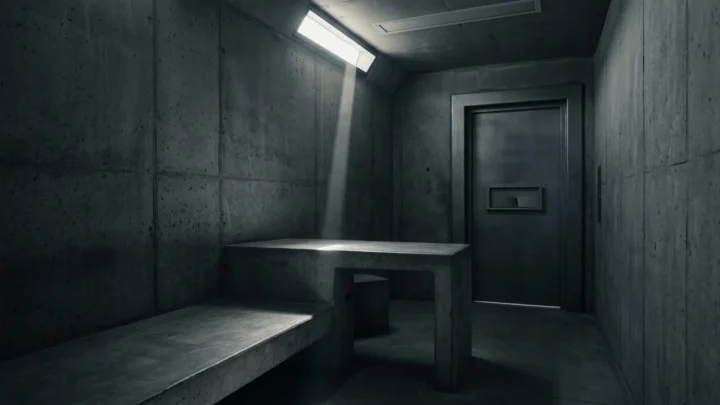
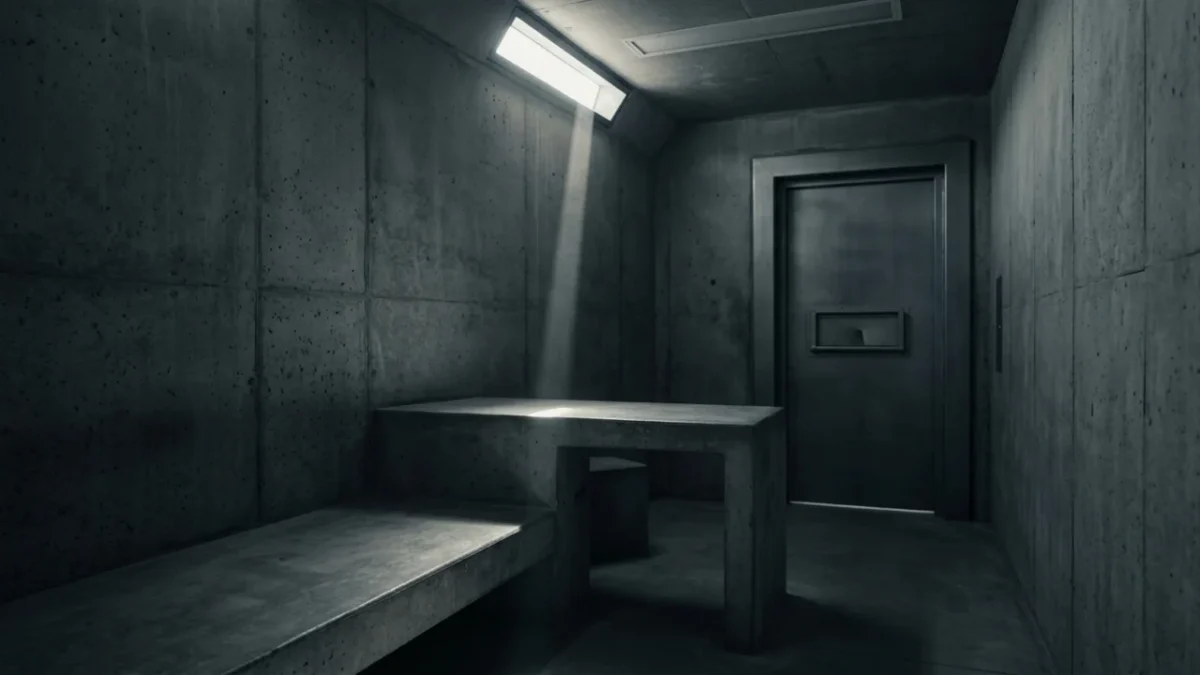
Hollywood portrayals often imagine underground dungeons with iron bars and shadowy corridors. The reality inside ADX Florence is far colder, sterile, and anchored by poured concrete. Cells measure approximately seven by ten feet, containing a poured-concrete slab, a desk, a stool, and a sleeping platform topped with a thin mattress.
Plumbing runs on automated, timed valves designed to prevent intentional cell flooding, while combination stainless-steel sinks and toilets deny any possibility of fabricating weapons from broken porcelain. Windows are narrow, four-inch-wide slits angled upward toward the sky. This deliberate architectural choice prevents prisoners from discerning their exact geographic location within the complex or catching sight of another recreation yard.
In an administrative maximum environment, architecture serves as the primary restraint; physical barriers must do what escorting staff cannot safely guarantee every hour of the shift.
Food trays pass through a solid steel door equipped with a secure cuff-port, colloquially called a bean slot. Officers slide meals directly into the cell, cutting off mess hall assemblies entirely. Inmates consume every meal in complete solitude, eliminating the most volatile staging ground for prison riots seen across lower-security facilities.
Operational Security: Debunking Hollywood Myths
Public fascination often reduces the supermax tier to a battle of physical brawn between guards and violent ringleaders. On the ground, the facility runs on rigid bureaucratic control, sensory dampening, and acoustic engineering. Walls are thick and sound-dampened to prevent tapping codes through pipes or shouting across housing ranges.
- No communal yards: Solitary recreation occurs in individual concrete enclosures known to staff as “dog runs,” allowing fresh air through overhead mesh without visual contact with peers.
- Controlled escorts: When an inmate leaves a cell, institutional protocol mandates a minimum two-officer escort with hands secured behind the back, leg irons attached, and a belly chain cinched.
- Zero cash economy: Contraband markets cannot function because personal interaction does not exist; there are no illicit transfers of shanks, narcotics, or cell phones.
- Predictable rotation: Unit management conducts randomized searches and routine cell swaps to prevent prisoners from tampering with fixtures or plotting breaches over extended periods.
The Legal Reality of Special Administrative Measures
For inmates tied to transnational criminal networks, espionage, or domestic extremism, standard containment is paired with Special Administrative Measures (SAMs). Authorized by the United States Attorney General under federal regulation, SAMs legally strip an inmate’s ability to communicate with the outside world beyond pre-cleared attorneys and strictly vetted immediate family members.
Mail is translated, scrutinized, and held for weeks by federal intelligence analysts before delivery, eliminating any coded instructions to active gang members or criminal conspirators on the street. Telephone access is restricted to monitored, scheduled calls that can be terminated instantly if an unapproved subject is broached. Through this legal firewall, the facility prevents prisoners from orchestrating outside operations from behind concrete.
Facility Profile: Standard Penitentiary vs. Supermax Unit
| Operational Factor | Administrative Maximum (ADX) |
|---|---|
| Movement Authorization | Escorted, multi-officer control with full mechanical restraints. |
| Housing Density | Strict single-cell occupancy; 22 to 23 hours daily inside the unit. |
| Recreation Structure | Individual outdoor enclosures; zero physical contact with peers. |
| Food Service Delivery | Direct delivery to cell cuff-ports; no central dining facilities. |
| Communications Monitoring | Tight administrative vetting; extensive application of federal SAMs. |
The Psychological Barrier: Routine Over Confrontation
Officers working these control units do not engage in rhetorical sparring with inmates on the range. The administrative objective is total neutrality; staff carry out counts, distribute medication, log movements, and run cuff-port operations with mechanical precision. Emotional reactions or procedural shortcuts create dangerous vulnerabilities in high-security management.
The true weight of ADX Florence settles over months and decades of unyielding stillness. Time ceases to register in typical social cycles, replaced entirely by meal deliveries, shift changes, and scheduled recreation rotations. For correctional professionals, it stands as the absolute endpoint of the federal penal system—a facility engineered so that escape, riot, or internal dominance remain structurally impossible.
🔒 Federal supermax management requires an uncompromising commitment to procedure where human error cannot be tolerated.
📁 The reality behind these reinforced walls is not movie drama, but a clinical, engineered system built to neutralize the nation’s most catastrophic institutional threats.
⚖️ Understanding the supermax model offers an unvarnished look at how modern correctional systems balance constitutional baselines against maximum-security isolation.
What is your perspective on the security measures enforced at ADX Florence? Share your thoughts in the comments below.