
Altiplano: Why Mexico’s Fortress Prison Keeps Failing the Maximum-Security Test

 Global Prisons
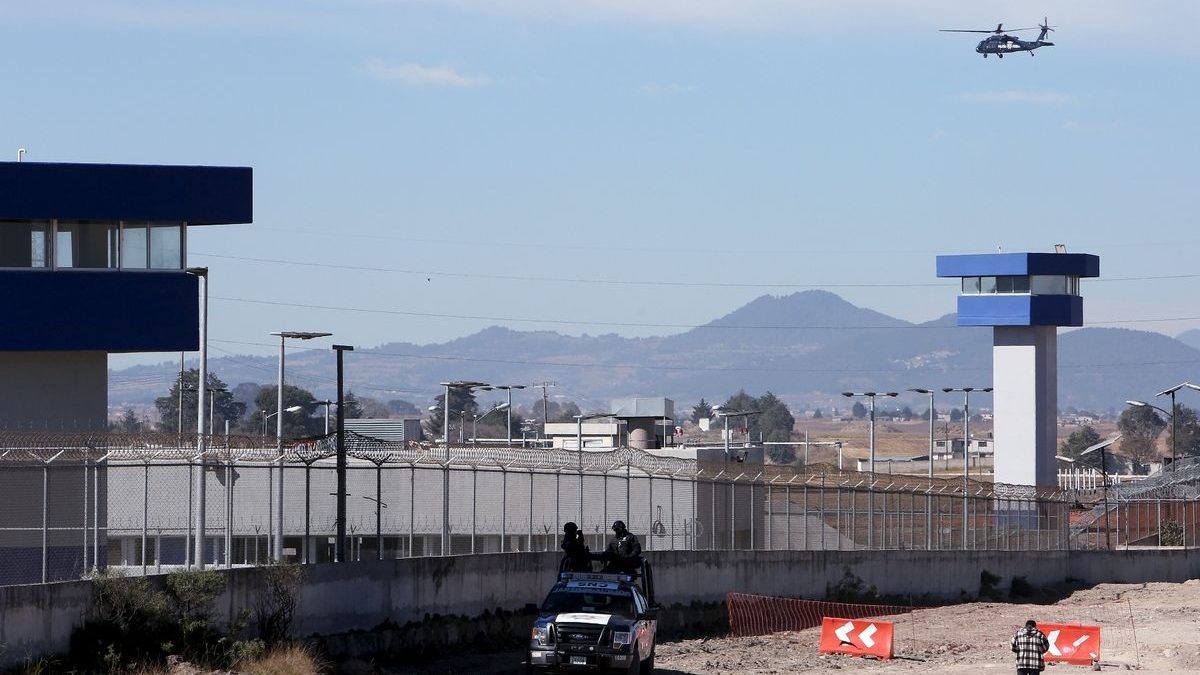
Operating behind fortified perimeters in Almoloya de Juárez, Altiplano prison stands as Mexico’s flagship maximum-security penitentiary, designed specifically to isolate the hemisphere’s most dangerous cartel figures. Yet decades of operational reality reveal that physical reinforcement cannot compensate for compromised perimeter controls and internal procedural breakdowns. For correctional professionals watching from across the border, the facility represents both the pinnacle of architectural containment and a case study in how institutional protocol collapses under external pressure.
Officially designated as Federal Social Readaptation Center No. 1 (CEFERESO No. 1), the complex was engineered to replicate the severe isolation doctrines used by the Federal Bureau of Prisons (BOP) at facilities like ADX Florence. Its design relies on segmented housing units, thick reinforced concrete slabs, and layered electronic checkpoints meant to eliminate inmate movement without direct officer escort.
When the human chain of custody fails, even a fortress becomes permeable. Understanding why this facility struggles to maintain total containment requires stripping away the mythology and inspecting the day-to-day mechanics of the facility’s tier management.
The Architecture of Total Confinement
On paper, Altiplano prison possesses the physical footprint of an impenetrable fortress. The compound spans several acres, surrounded by multi-layered perimeter fences, armed patrol towers, and ground sensors engineered to detect vehicular movement and unauthorized foot traffic.
Inmates assigned to the highest custody tiers are subjected to restricted movement regimens similar to administrative segregation in the United States. Communication between cells is structurally restricted by solid steel doors and double-poured concrete dividing walls designed to prevent structural tampering.
- Restricted Movement Logs: Inmates leave cells exclusively under multi-officer escort with mechanical restraints applied prior to door breach.
- Electronic Countermeasures: Cellphone jammers and closed-circuit monitoring systems intended to disrupt outside command networks.
- Perimeter Isolation: Buffer zones designed to prevent unmonitored approaches by external logistics networks.
Every operational safeguard on the tier depends entirely on the integrity of the officers running the control center. Without strict accountability in the central control room, physical barriers serve as little more than visual deterrence.
In high-security custody management, physical barriers do not stop escapes; disciplined adherence to post orders and continuous surveillance do.
The Blind Spot: Engineering the 2015 Breach
The institutional limits of Altiplano prison were laid bare during the July 2015 escape of Sinaloa Cartel leader Joaquín “El Chapo” Guzmán. The breach remains an infamous breakdown in correctional engineering, relying not on armed assault, but on an exploitation of mandated privacy protocols.
Guzmán slipped through a small opening in his private shower stall, descending into an engineered, ventilated tunnel spanning over a mile to an off-site property. The shower area was one of the few designated blind spots in the cell where video surveillance was restricted to protect inmate privacy.
Protocol Versus Practice in Tier Monitoring
From a corrections perspective, an excavation of that scale produces clear operational indicators that should trigger immediate emergency counts and physical cell searches. Moving thousands of pounds of subsoil requires extensive noise, vibration, and logistical coordination that should not evade sensory monitors.
Standard correctional post orders require immediate physical verification whenever an inmate disappears from a monitored camera frame for an extended interval. In this instance, the delay between the inmate’s visual disappearance and the tactical response team entering the cell highlighted a catastrophic operational failure rather than an engineering accident.
Comparative Custody: Design Specifications Versus Tier Reality
Evaluating the facility requires contrasting its theoretical design standards against documented institutional vulnerabilities. The gap between facility design and real-world execution explains why containment repeatedly breaks down.
| Design Standard | Documented Operational Reality |
|---|---|
| Reinforced floor slabs engineered to resist excavation | Targeted structural drilling beneath unmonitored shower drains |
| Continuous 24-hour video feeds in high-risk special housing | Mandated blind spots that obscure ground-level structural alterations |
| Multi-layered perimeter checkpoints and buffer space | Civilian construction adjacent to perimeter walls enabling tunnel access |
| Total communication blackouts for high-profile gang leadership | Illicit intelligence leaks facilitating off-site engineering coordination |
The Extradition Pipeline and Federal Law Enforcement
For United States law enforcement agencies, including the Drug Enforcement Administration (DEA) and the U.S. Marshals Service, the facility functions as the final staging ground before international extradition proceedings. High-value targets held inside its secure units are routinely prioritized for transfer to federal jurisdictions in the United States to nullify local operational influence.
When an inmate at this level faces an active federal indictment on American soil, custody management inside the facility shifts into high-alert posture. The primary objective becomes preserving the inmate’s security and chain of custody until federal air transport assets touch down.
Retaining high-ranking cartel organizers inside domestic facilities consistently exposes local corrections staff to severe extortion and tactical threats. The ultimate resolution for sovereign containment often requires moving the inmate entirely out of the local theater and into the federal supermax framework.
🔒 Physical walls, razor wire, and motion detectors can delay an escape attempt, but they cannot secure a facility on their own.
📁 The historical breaches at Altiplano prison prove that procedural discipline inside the control room remains the real deciding factor in maximum security.
⚖️ Until operational integrity consistently matches the strength of the concrete barriers, high-profile containment will continue to challenge international justice systems.
Do you believe maximum-security facilities can ever be truly escape-proof against organized crime syndicates? Share your analysis in the comments below.







