
Rex Heuermann Sentencing: The Gilgo Beach Killer Faces Consecutive Life Sentences After Final Courtroom Confrontation

 Convict Files
Rex Heuermann listens as victims' families deliver impact statements prior to the imposition of consecutive life sentences.
The legal reckoning for the serial killer who terrorized Long Island for seventeen years has culminated in absolute institutional confinement: Rex Heuermann has received consecutive life sentences behind bars, formally ending the courtroom proceedings in the Long Island murders that went unsolved for over a decade. After pleading guilty to slaughtering seven women and confessing to an eighth uncharged slaying, the 62-year-old former Manhattan architect was ordered to serve three consecutive life sentences followed by four consecutive terms of 25 years-to-life. For any veteran correctional officer who has managed tier security, the resolution of the rex heuermann gilgo beach prosecutions marks the point where legal maneuverings end and the stark, permanent reality of high-custody incarceration takes over.
The final hearing transformed the courtroom into a raw gauntlet of survivor confrontation before Suffolk County Court Judge Timothy Mazzei commanded officers to remove the chained killer. Anguished relatives took the stand to face the man who strangled their daughters, sisters, and mothers before leaving their remains scattered along the isolated brush of Ocean Parkway. Facing victims’ families who waited decades for answers, Heuermann offered merely a hushed whisper, admitting softly that he felt regret only after direct intervention from the bench.
Under the conditions established in his comprehensive plea agreement, the killer will not merely spend his remaining days behind maximum-security perimeter fencing. Heuermann agreed to submit to extensive, formal debriefings conducted by the Federal Bureau of Investigation‘s Behavioral Analysis Unit, yielding law enforcement unprecedented access to the operational methods behind his 17-year campaign of predation.
Inside the Courtroom Confrontation and Plea Agreement
The sentencing hearing dismantled years of investigative secrecy with devastating emotional force. Family members addressed Heuermann directly, refusing to allow him to maintain the detached posture he presented throughout early pre-trial hearings. Violet Swager and Jasmine Robinson, cousins of victim Jessica Taylor, condemned his cowardice and violence, while Missy Cann, sister of Maureen Brainard-Barnes, spoke to the irreplaceable loss inflicted upon their families.
Amanda Funderberg, the sister of Melissa Barthelemy, forced a direct confrontation over the sadistic phone calls Heuermann placed to her seventeen years ago to claim he was letting her sister rot. “You can look at me while I’m talking,” Funderberg told the killer, staring him down as the gallery watched the once-arrogant professional architect shrink into his seat. Liliana Waterman, who lost her mother Megan Waterman at age nine, documented the sixteen consecutive Mother’s Days stolen from her childhood.
“The words I would say have no meaning and I’m going to leave it there.”
When Judge Mazzei directly pressed Heuermann on whether he felt remorse for the women he butchered, the defendant uttered a faint affirmation. Unimpressed by the hollow concession, Mazzei ordered court officers to escort him out, drawing spontaneous applause from the gallery as relatives openly derided the convicted predator while cuffs clicked around his wrists.
The Eight Confessed Victims and Formal Penal Scope
The formal resolution accounted for crimes spanning almost two decades. Heuermann entered guilty pleas for seven distinct homicides while admitting responsibility for an eighth uncharged murder as part of the state agreement:
- Jessica Taylor: Strangled and dismembered, her remains discovered in Manorville and near Ocean Parkway.
- Melissa Barthelemy: Disappeared in 2009, resulting in targeted taunting phone calls to her surviving family.
- Megan Waterman: Slain in 2010 after disappearing from a Hauppauge hotel.
- Maureen Brainard-Barnes: The earliest of the core Gilgo victims, murdered in 2007.
- Amber Lynn Costello: Disappeared in September 2010 from West Babylon.
- Valerie Mack: Identified through advanced genetic genealogy after her remains were recovered in Manorville and near Gilgo Beach.
- Sandra Costilla: Killed in November 1993, establishing the extended chronological scope of the architect’s violence.
- Karen Vergata: An eighth victim whom Heuermann formally admitted to killing under the terms of the agreement, despite facing no separate indictment for her murder.
Prison Classification and Behavioral Analysis Protocols
From an institutional management perspective, an inmate entering state custody under multiple consecutive life sentences poses acute security challenges. In high-security state facilities, high-profile serial predators cannot integrate into general population without creating immediate yard instability and violent retaliation risks. State classification boards balance punitive isolation, physical safety, and suicide deterrence through specialized protective segregation or restricted housing directives.
| Legal & Custody Metric | Documented Case Disposition |
|---|---|
| Adjudicated Sentences | 3 Consecutive Life Terms + 4 Consecutive Terms (25-to-Life) |
| Admitted Homicides | 8 Victims (7 Pled Guilty, 1 Uncharged Admission) |
| Federal Investigative Mandate | Mandatory BAU (Behavioral Analysis Unit) debriefing interviews |
| Inmate Defense Demeanor | Stated words “have no meaning”; acknowledged minimal sorrow on record |
The plea condition mandating extensive behavioral interviews with federal profilers represents a critical investigative asset. The FBI’s Behavioral Analysis Unit utilizes structured debriefs with convicted serial killers to refine threat assessments, evaluate disposal site rituals, and resolve open case clearances nationwide. These interviews take place within secure, controlled holding rooms under stringent chain-of-custody protocols, documenting tactical patterns without granting the inmate special institutional privileges.
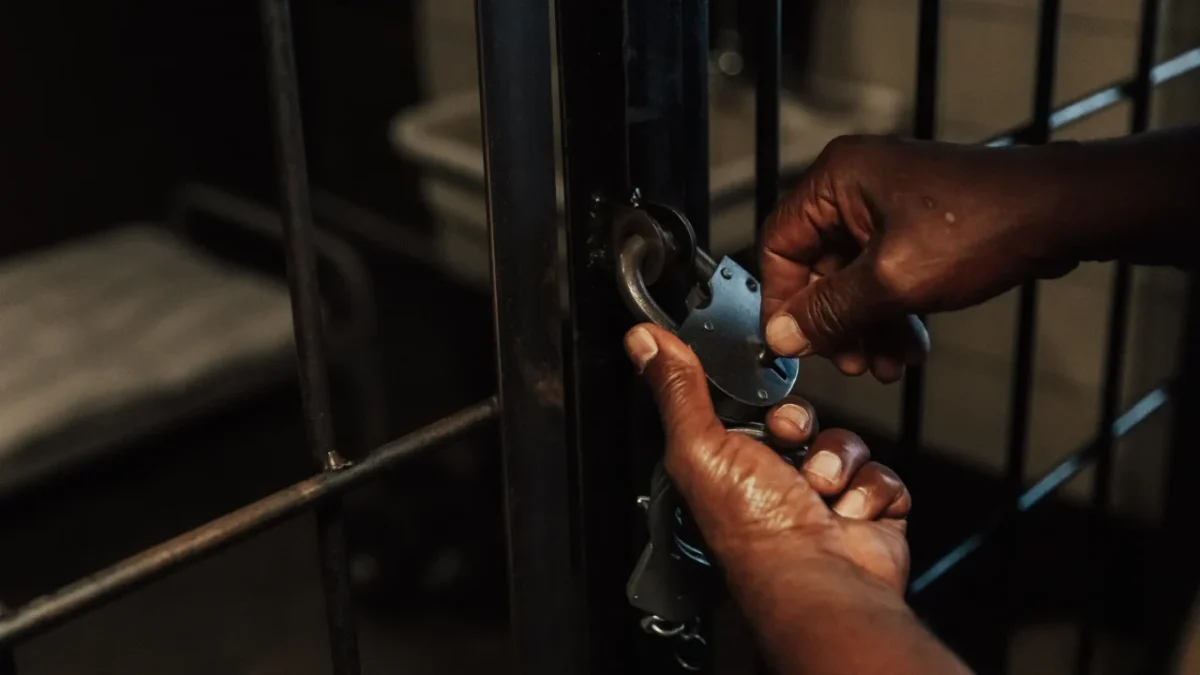
Popular media often paints serial killers as criminal masterminds who outmaneuver prison walls, but correctional reality is unyielding. Strip searches, steel sliding gates, concrete slab bunks, and heavily monitored communications define everyday existence for the remainder of a natural life. For Heuermann, the professional trajectory of planning blueprints in midtown Manhattan is replaced entirely by institutional count bells and permanent isolation.
🔒 True closure in complex serial murder cases is never absolute, but consecutive life sentences provide an unbreachable barrier between a predator and the public.
⚖️ By securing admissions on uncharged cases like Karen Vergata, investigators ensured the legal historical record reflects the complete, horrific scale of Heuermann’s actions.
📁 The mandate placing the killer before federal behavioral profilers ensures law enforcement extracts operational data that may help solve cold cases left lingering in municipal files across the country.
Share this investigation with fellow true-crime followers and let us know your thoughts on the final sentencing disposition in the comments below.







