
Inside the Rex Heuermann Superseding Indictment: How Prosecutors Expanded the Gilgo Beach Murder Charges

 Convict Files
Pretrial motions and forensic logs continue to define the expanded prosecution of Rex Heuermann in Suffolk County.
A grand jury superseding indictment does not merely stack counts onto an existing docket; it systematically dismantles a defense team’s foundational strategy by introducing newly corroborated physical and digital forensic links. In the prosecution of Rex Heuermann, successive charging documents expanded the core scope of the Gilgo Beach homicides, formally tying the Long Island architect to additional unsolved deaths through advanced genetic genealogy and recovered digital working files. For correctional staff and trial prosecutors alike, every additional victim named in an indictment transforms both the logistical burden of trial preparation and the daily management protocols required inside county detention.
The initial charges centered on the deaths of Melissa Barthelemy, Megan Waterman, and Amber Lynn Costello—later expanding to Maureen Brainard-Barnes—collectively documented for years as the “Gilgo Four.” When the Suffolk County District Attorney’s Office brought forward superseding true bills, the scope broadened to incorporate earlier homicides, notably Jessica Taylor and Sandra Costilla. That procedural maneuver altered the entire architecture of the state’s case from a localized cluster to an alleged decades-long predatory pattern.
The Mechanics of a Superseding Indictment Behind Barbed Wire
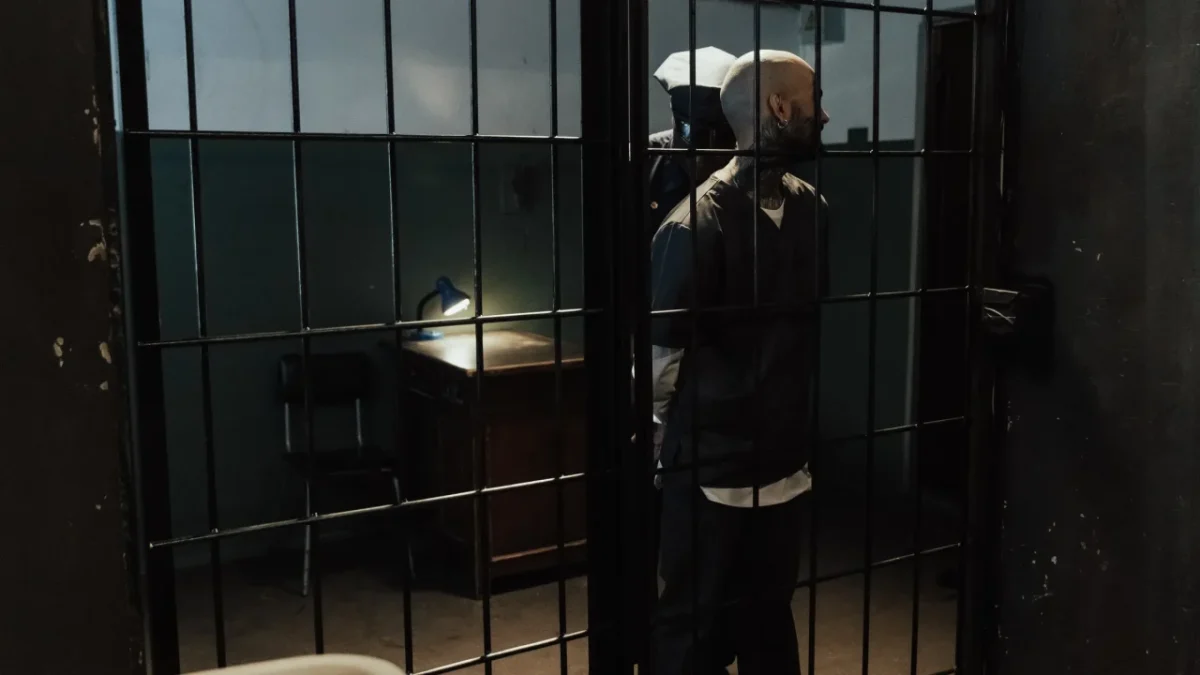
When prosecutors return to a grand jury for a superseding indictment, the defendant is re-arraigned, fresh pleas are entered on the record, and discovery production resets under statutory time constraints. Inside a secure facility like the Suffolk County Correctional Facility in Riverhead, this process triggers heightened security postures. Each court run for a capital-profile defendant demands tactical transport units, cleared corridors, and strict operational secrecy to eliminate contact with general population inmates.
In pretrial maximum security housing, protective segregation is not a privilege; it is an airtight protocol designed to safeguard both the inmate’s life and the integrity of the state’s trial proceedings.
The institutional reality of managing high-profile defendants accused of serial violence requires isolating them completely from institutional traffic. Inmates facing multiple life sentences without parole alter the risk assessment of an entire cell block. Correctional supervisors must ensure chain-of-custody protocols not only for evidence entering the courthouse, but also for legal mail, cell searches, and phone monitoring within the housing unit.
Administrative Segregation: Managing a High-Profile Defendant
Under standard county jail classification schemes, an inmate charged under multiple murder indictments is categorized under maximum administrative segregation. This placement isolates the individual from the regular inmate economy where contraband, extortion, and targeted assaults thrive. A defendant in this status typically spends 23 hours a day locked down, with recreation and legal visits monitored under direct post observation.
Staff members assigned to these posts maintain detailed activity logs recording every interaction, telephone call, and meal tray delivery. Corrections officers understand that any irregular procedural step or undocumented incident can become the subject of aggressive evidentiary motions by defense counsel seeking to challenge confinement conditions or state interference.
Connecting the Cold Cases: Forensic Links and Digital Manifests
The prosecution’s ability to fold additional victims into superseding filings relied heavily on non-traditional forensic science that had stalled older task forces. Investigators from the Federal Bureau of Investigation and local task forces paired modern nuclear and mitochondrial DNA testing with recovered personal computer data. The discovery of comprehensive planning documents, extracted from hard drive sectors once presumed overwritten, gave prosecutors a documented blueprint of hunting methods, body disposal sites, and targeted operational measures.
- Deoxyribonucleic Acid (DNA) Advances: Utilization of specialized mitochondrial analysis capable of extracting viable genetic profiles from rootless hair shafts retrieved at secondary disposal locations.
- Digital Footprint Recovery: Recovery of proprietary text manifests detailing victim profiles, logistical preparations, and counter-surveillance tactics.
- Vehicle Telematics & DMV Data: Cross-referencing historical registration documents—such as a dark-colored Chevrolet Avalanche—with toll scans, cellular tower pings, and witness reports spanning Nassau and Suffolk counties.
- Jurisdictional Geofencing: Correlating cell tower connections in Midtown Manhattan with burner phone activations purchased under aliases.
Defense teams routinely counter superseding filings by challenging joinder—the legal merging of multiple crimes into a single trial. Counsel often argues that trying distinct homicides together prejudices the jury, making it nearly impossible for jurors to weigh each victim’s evidence independently. Judges must balance judicial economy against constitutional due process when deciding whether to sever counts or allow a unified trial.
| Legal & Operational Factor | Procedural Reality |
|---|---|
| Joinder of Charges | Consolidates multiple homicide victims into a single trial docket to show an overarching common scheme or plan. |
| Defense Severance Motions | Petitions seeking separate trials for each victim to prevent cumulative evidence from swaying jury deliberation. |
| Custodial Classification | Enforces strict administrative segregation to block inmate interaction and preserve physical security. |
| Forensic Chain of Custody | Requires strict documentation of multi-decade-old physical evidence transferred between cold-case vaults and modern private labs. |
Why Defense Teams Struggle Against Layered Indictments
When prosecutors incrementally file superseding indictments, the defense faces an exhausting paper war. Each new victim introduced requires independent ballistic, botanical, forensic, and alibi re-investigations spanning crime scenes separated by years or even decades. The volume of digital discovery—measured in terabytes of cell site data, search history logs, and laboratory testing benchmarks—places intense pressure on appointed counsel.
Moreover, the introduction of earlier cold cases challenges the argument that the core murders were committed by different perpetrators operating across the same geographical corridor. By demonstrating consistent physical bindings, concealment tactics, and transport methodologies across multiple jurisdictions, the state builds an institutional narrative designed to survive appellate scrutiny.
⚖️ Pretrial maneuvering in complex capital-scale prosecutions is an endurance test governed by statutory deadlines, expert witness qualifications, and ironclad chain-of-custody protocols.
📁 As filings continue through the state court system, official court records and county dockets remain the definitive baseline for verified developments, separating procedural facts from outside speculation.
🔒 Inside the facility walls, administrative protocol remains unchanged: high-security observation, tight custody management, and zero room for procedural error while the legal system grinds forward.
Share this investigative analysis with your network, or leave your thoughts on the prosecution’s superseding strategy below.







