
Alcatraz: Why the Federal Bureau of Prisons Built America’s Coldest Island Fortress and How Its Security Protocols Still Shape Modern Maximum Custody

 Convict Files
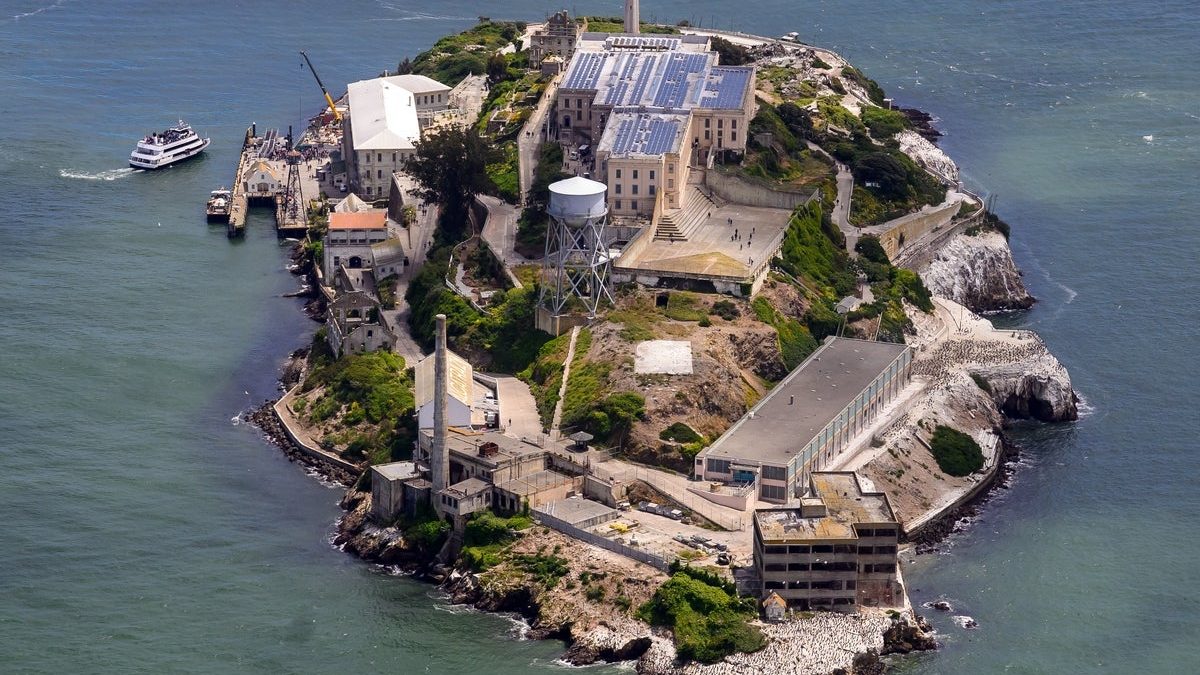
Operating a high-security lockup comes down to environmental control, and no facility in American history executed physical isolation quite like Alcatraz. When the Federal Bureau of Prisons (BOP) acquired the wind-whipped rock in San Francisco Bay in 1934, custody supervisors designed it to handle one specific crisis: the unmanageable inmate who compromised security at standard penitentiaries.
Every tier inside the main cellhouse was engineered to strip outside leverage and eliminate institutional bargaining. Unlike state penitentiaries where inmates moved through general population programs and industrial yards, this installation functioned on total sensory suppression and relentless visual supervision.
For officers walking the gun galleries suspended above the cellblocks, physical dominance was absolute. Custody staff knew what the public often forgets: the island was never built for rehabilitation, but as an end-of-the-line containment unit designed to break inmate networks across the federal system.
The Intake Funnel: How Inmates Landed on the Rock
Criminal courts never sentenced offenders directly to the island during its operational run from 1934 to 1963. Instead, the facility served as an internal transfer hub for convicts already serving federal time who staged riots, murdered staff, or repeatedly breached perimeter fencing at facilities like USP Leavenworth and USP Atlanta.
The institutional intake board operated under strict discretion. Transfer packets required sign-off at the highest bureaucratic levels of the Federal Bureau of Prisons, ensuring only high-risk escape threats, violent disruptors, and high-profile racketeers took the ferry from Fort Mason.
In high-security custody, containment is never about brute force alone; it relies entirely on the absolute predictability of the daily count and the removal of inmate autonomy.
Once an inmate walked into the processing room, the institution stripped his civilian identity down to a registry number. Personal property was restricted to basic hygiene gear, standard-issue clothing, and approved reading material, effectively severing connection to gang organizations operating on mainland tiers.
Cellhouse Architecture and Tactical Engineering
Standard architectural weak points found in municipal jails and county facilities did not exist within the primary cellblocks. The facility utilized steel cell fronts hardened with tool-proof tool-resistant alloys, specifically intended to defeat hacksaw blades smuggled through supply chains.
- Suspended Gun Galleries: Elevated catwalks protected by heavy iron bars allowed armed correction officers to patrol above the tier with rifles and gas guns, keeping lethal force completely out of inmate reach.
- Cell Block C and D Isolation: Segregation units, commonly designated as treatment units or “the hole,” provided zero light, no plumbing amenities, and forced sensory isolation for protocol violations.
- Automated Mechanical Locking: Bank levers located at the end of each run controlled cell doors simultaneously or individually, eliminating the need for floor officers to carry brass tier keys during inmate movement.
Floor officers were strictly forbidden from carrying firearms among the general population inside the dining hall or recreation yard. If an officer was taken hostage, the weapon could not fall into inmate hands, forcing prisoners to negotiate without lethal leverage.
Dissecting Routine and The Count Protocol
The daily schedule inside the cellhouse operated with surgical repetition to expose even minor timing discrepancies. Institutional counts occurred more than a dozen times in a 24-hour cycle, making unmonitored movement virtually impossible.
Inmates worked under guarded scrutiny in the model shop, laundry, or industrial docks, earning minor privileges through rigid compliance. Any breach of institutional rules resulted in swift administrative transfer to D-Block, resetting the inmate’s progress towards a mainland penitentiary transfer.
| Operational Area | Custody Standard |
|---|---|
| Cellhouse Population | Single-cell occupancy with no communal mingling during lock-in hours |
| Perimeter Security | Surrounding sub-55°F bay currents, elevated watchtowers, armed launch patrols |
| Staff-to-Inmate Ratio | Approximately one officer for every three inmates, unmatched in BOP history |
| Inmate Movement | Chime-activated callouts and supervised single-file transit between stations |
The Escape Myth vs. Forensic Reality
Hollywood portrayals of life inside the facility lean heavily on dramatic sewer crawls and rogue boat rendezvous. On the ground, successful escapes from maritime prisons fail because the primary perimeter is not concrete; it is the hypothermic shock of the open water.
The infamous June 1962 escape orchestrated by Frank Morris and the Anglin brothers required months of clandestine structural chipping using spoons and salvaged vacuum motors. While pop culture romanticizes the possibility of a clean getaway, historical marine data and forensic recoveries confirm that hypothermia and strong outgoing tides in the Golden Gate channel leave minimal room for physical survival.
Investigative files from the Federal Bureau of Investigation (FBI) and the United States Marshals Service tracked every recovered artifact, from waterlogged paddles to personal photo wallets washed up near Angel Island. In the penal system, the lack of an identified body does not confirm survival; it simply demonstrates the unforgiving nature of maritime currents.
The Logistical Collapse and Transition to Modern Supermax
By the early 1960s, physical containment gave way to financial failure. Saltwater deterioration destroyed structural concrete, while the requirement to barge all potable water and food across the bay skyrocketed the operational per-diem cost well above mainland facilities.
Attorney General Robert F. Kennedy authorized the final decommissioning in March 1963, transferring remaining convicts to newer institutions like USP Marion in Illinois. The foundational lessons learned on the island eventually gave birth to the modern federal administrative maximum classification seen today at ADX Florence in Colorado.
🔒 Modern corrections relies on electronic surveillance, architectural zoning, and subterranean intake rather than saltwater moats to control federal risks.
📁 The physical plant on the rock stands today as an intact historical artifact, illustrating what happens when the legal system builds a facility designed solely for total behavioral control.
⚖️ Understanding that institution strips away the Hollywood legend and exposes the cold mechanics of American institutional punishment.
Share this operational breakdown with fellow true-crime followers and join the discussion on maximum-security history below.







